- LIEFERUNG AM NÄCHSTEN TAG
- versandkostenfrei innerhalb des deutschen Festlands
- KOSTENLOSE RÜCKSENDUNG
- 14 Tage Rückgabe
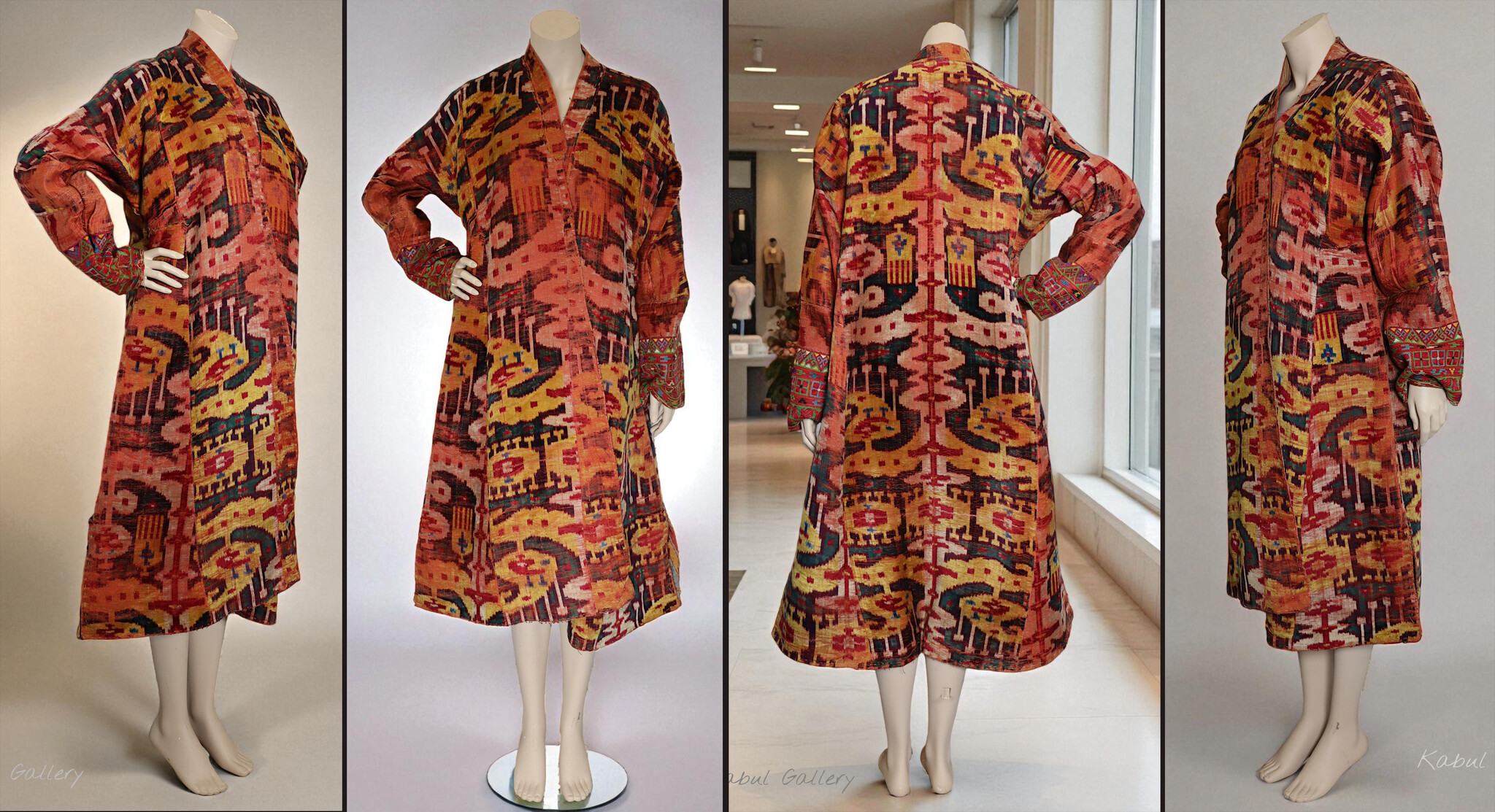
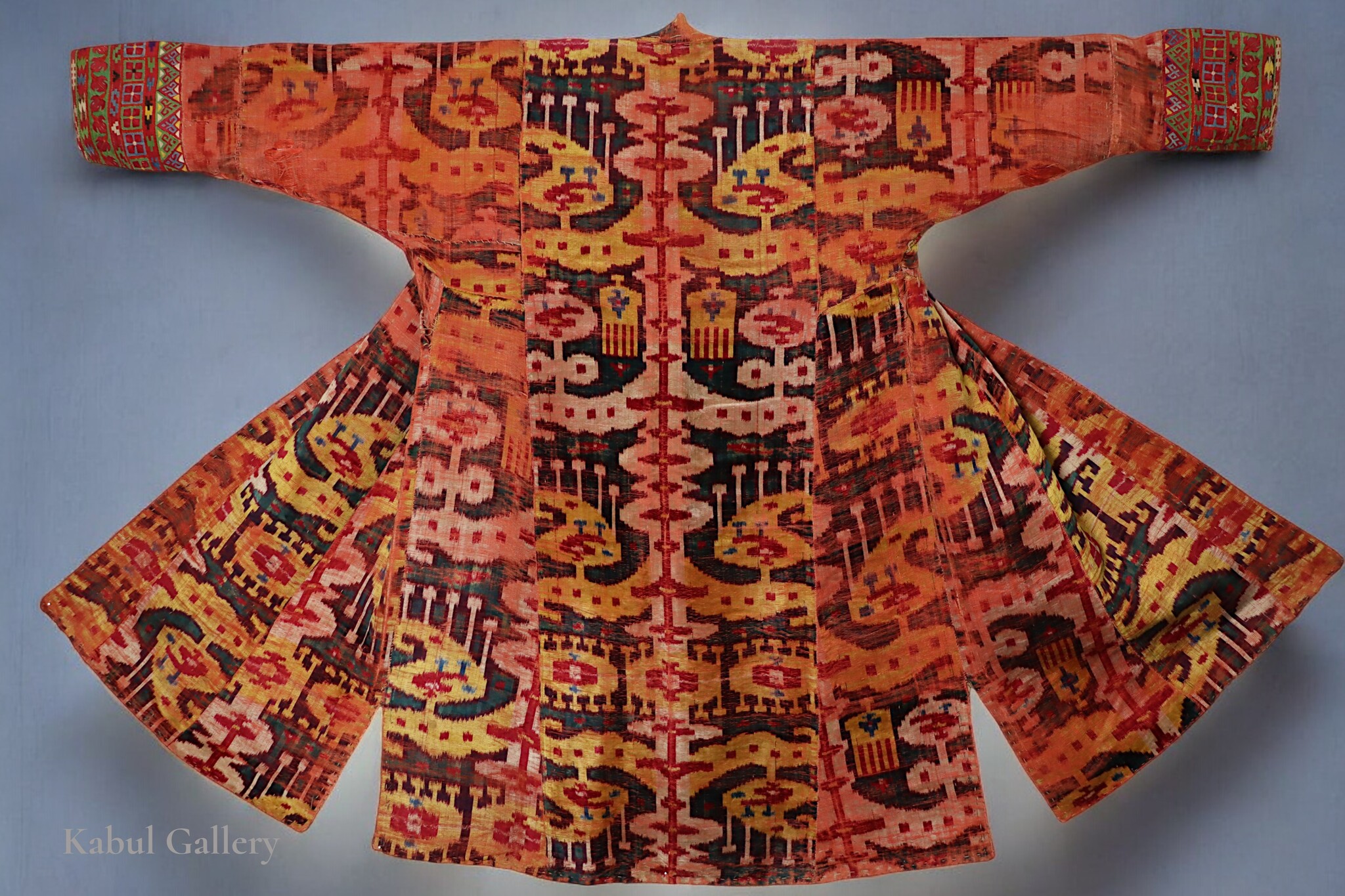
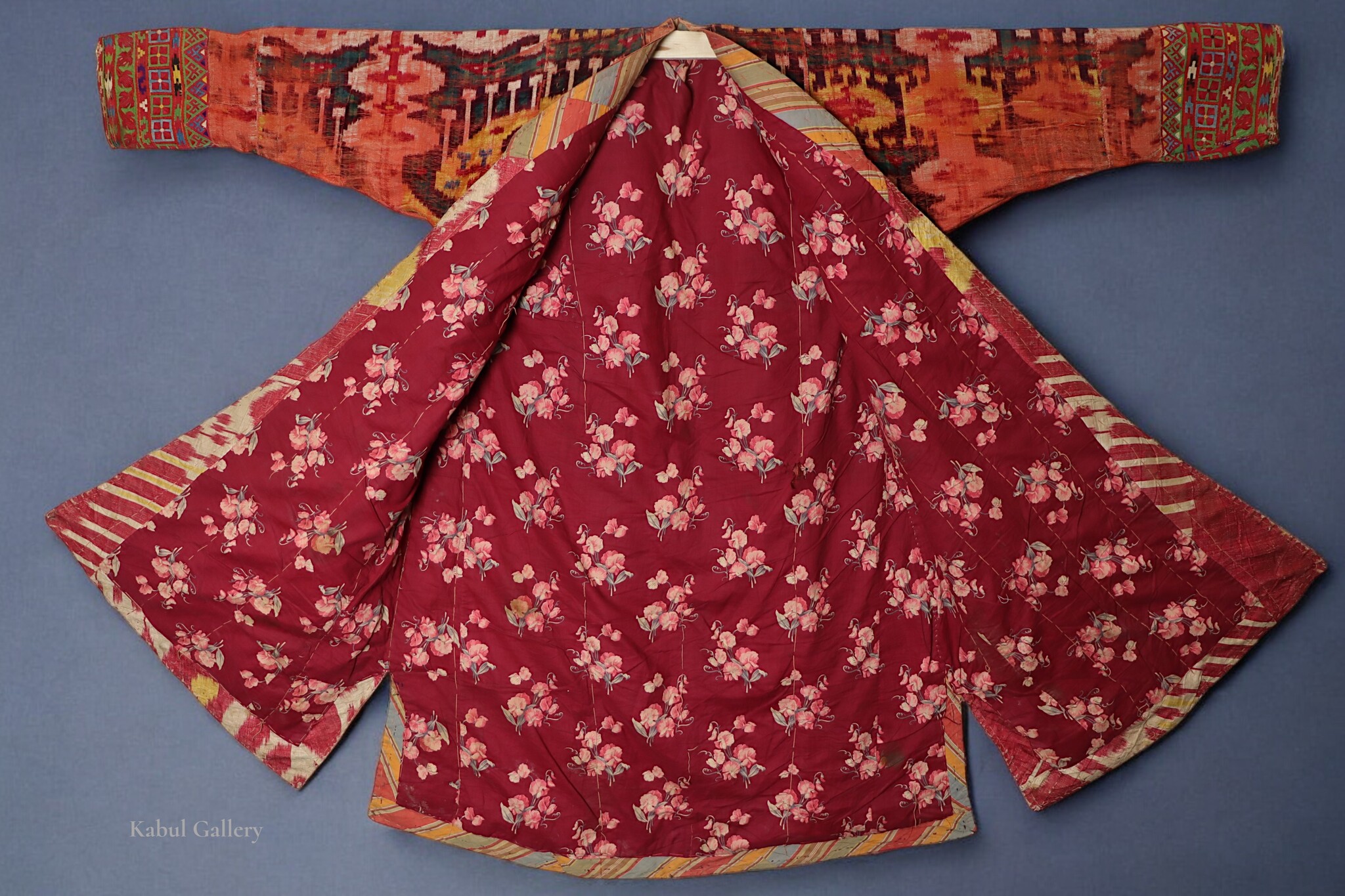
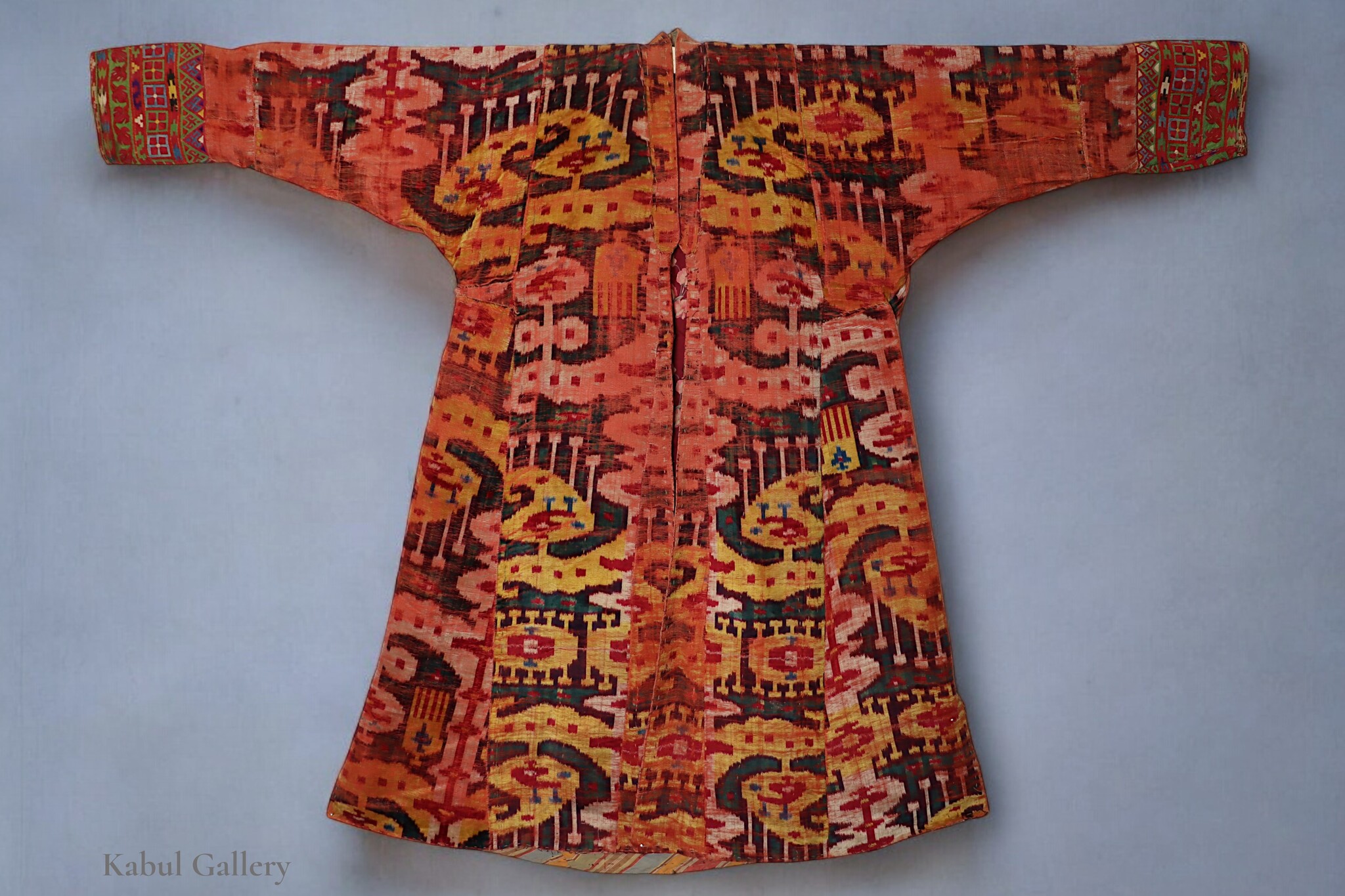
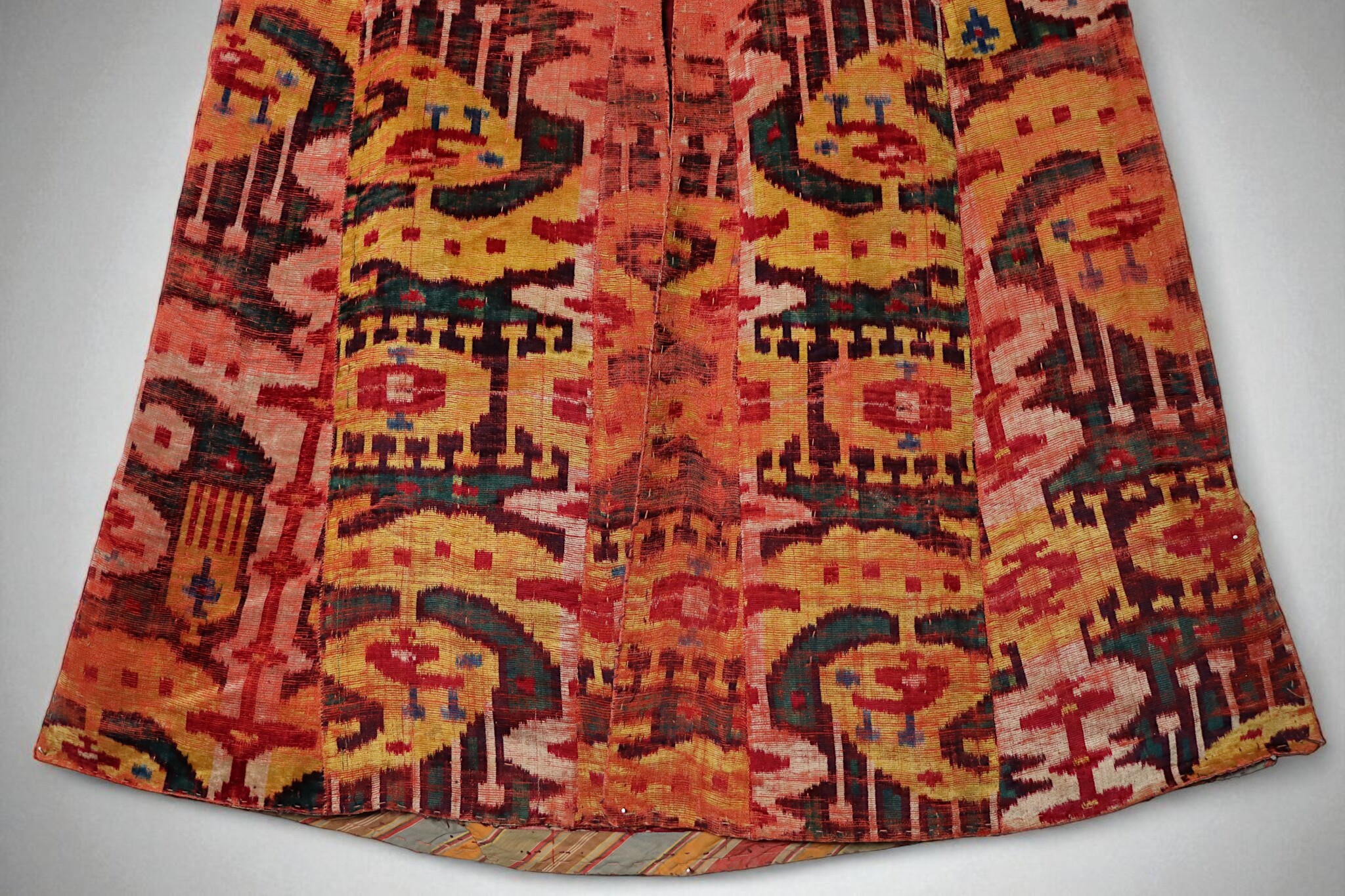
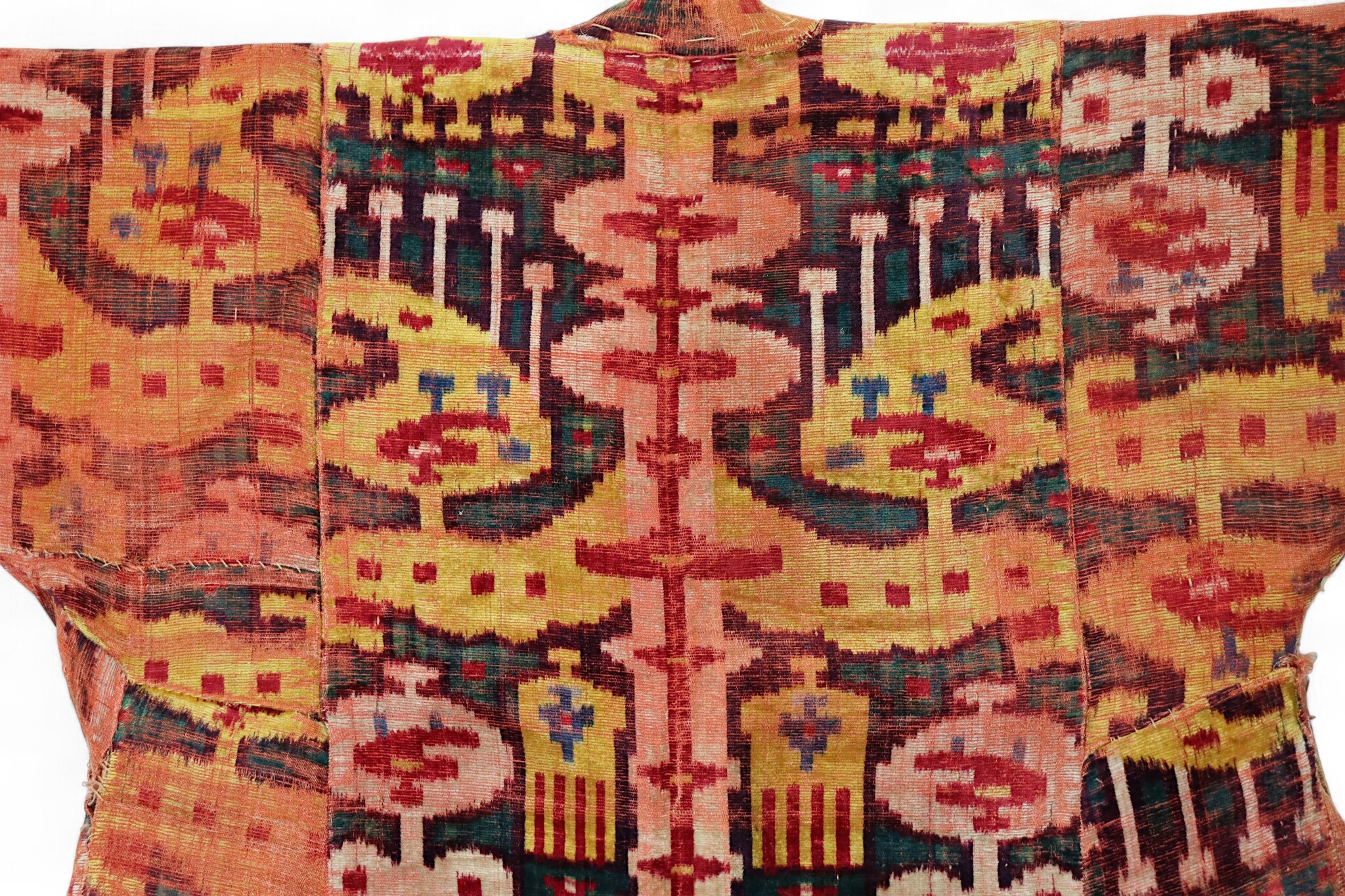
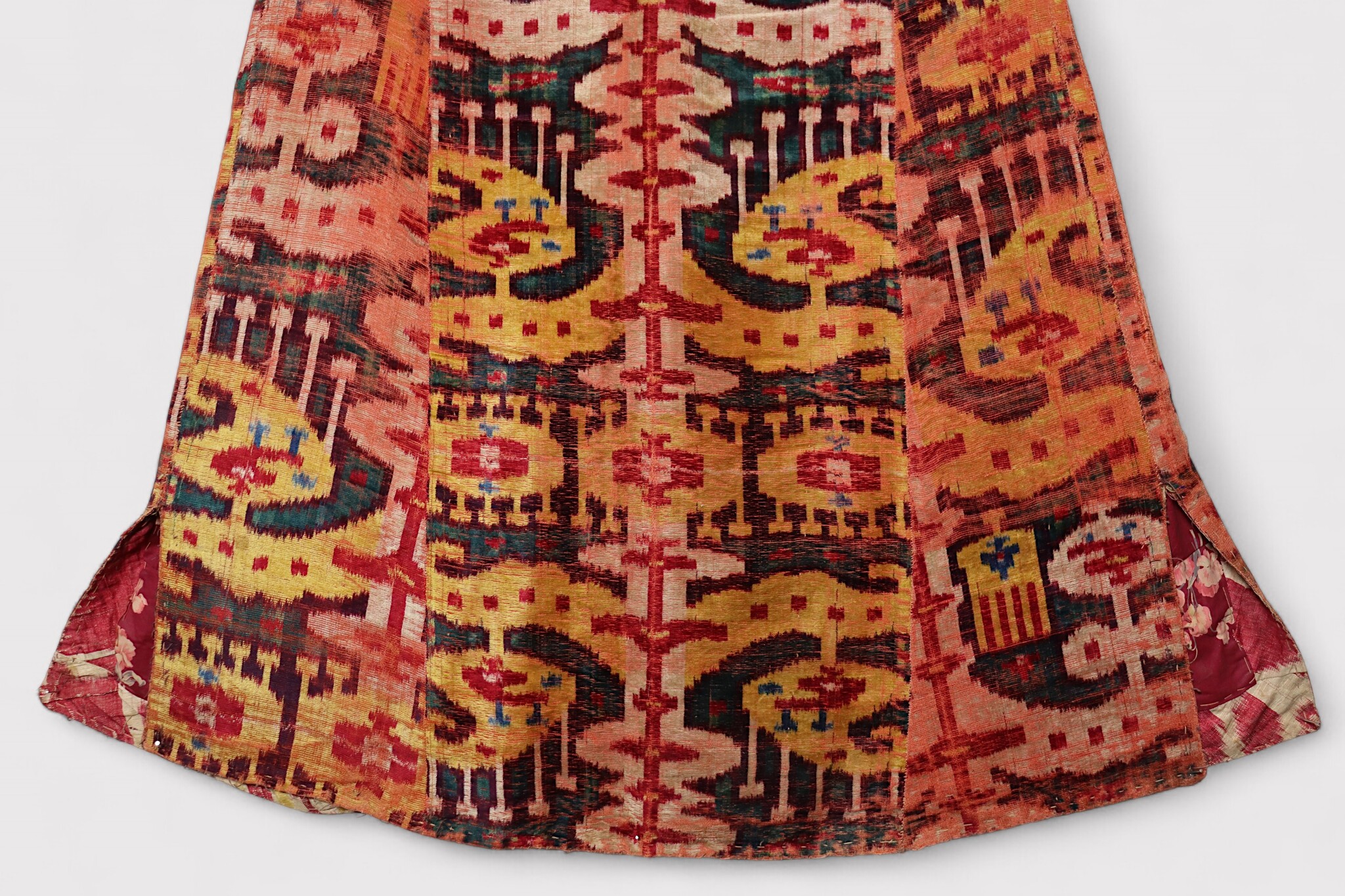
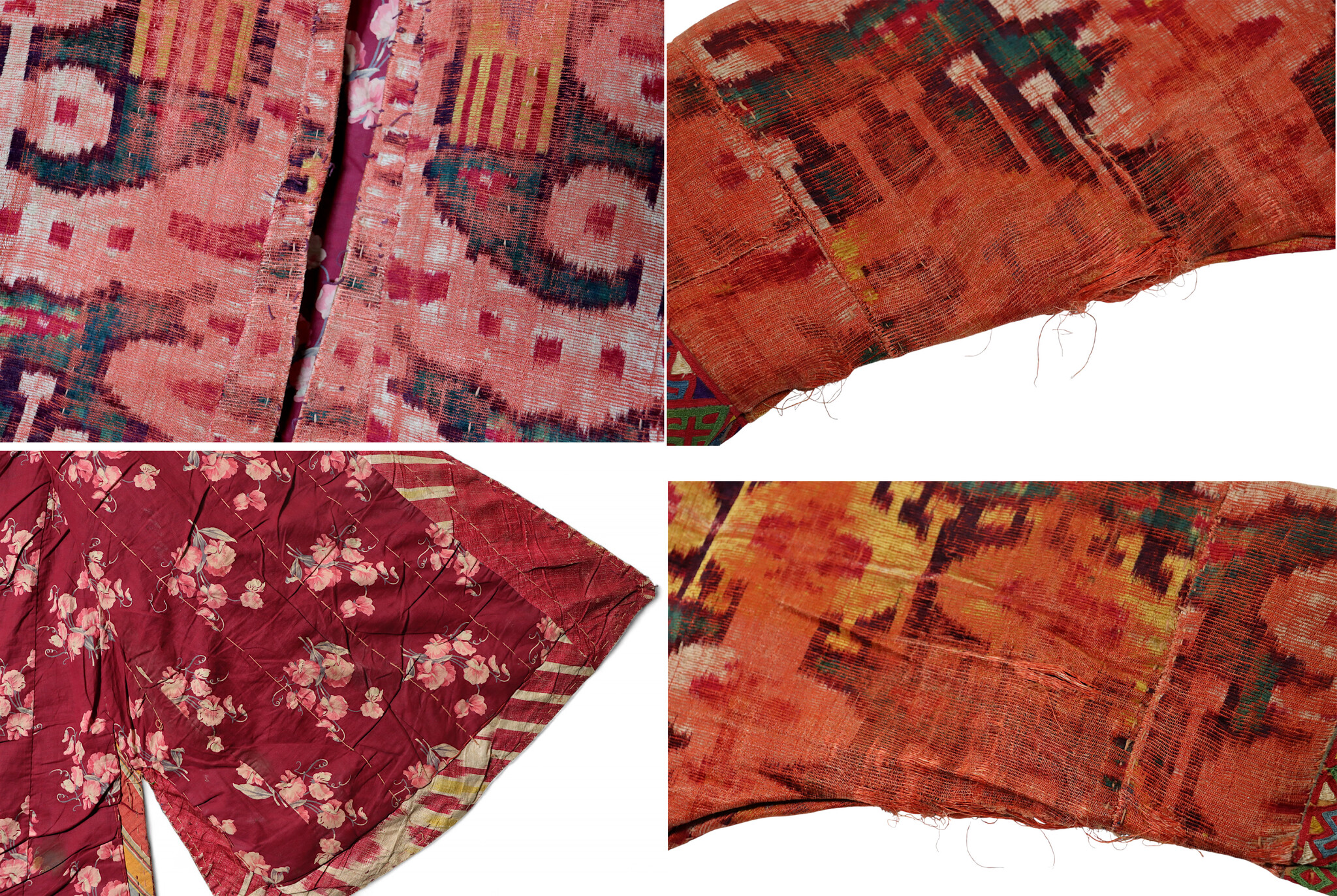
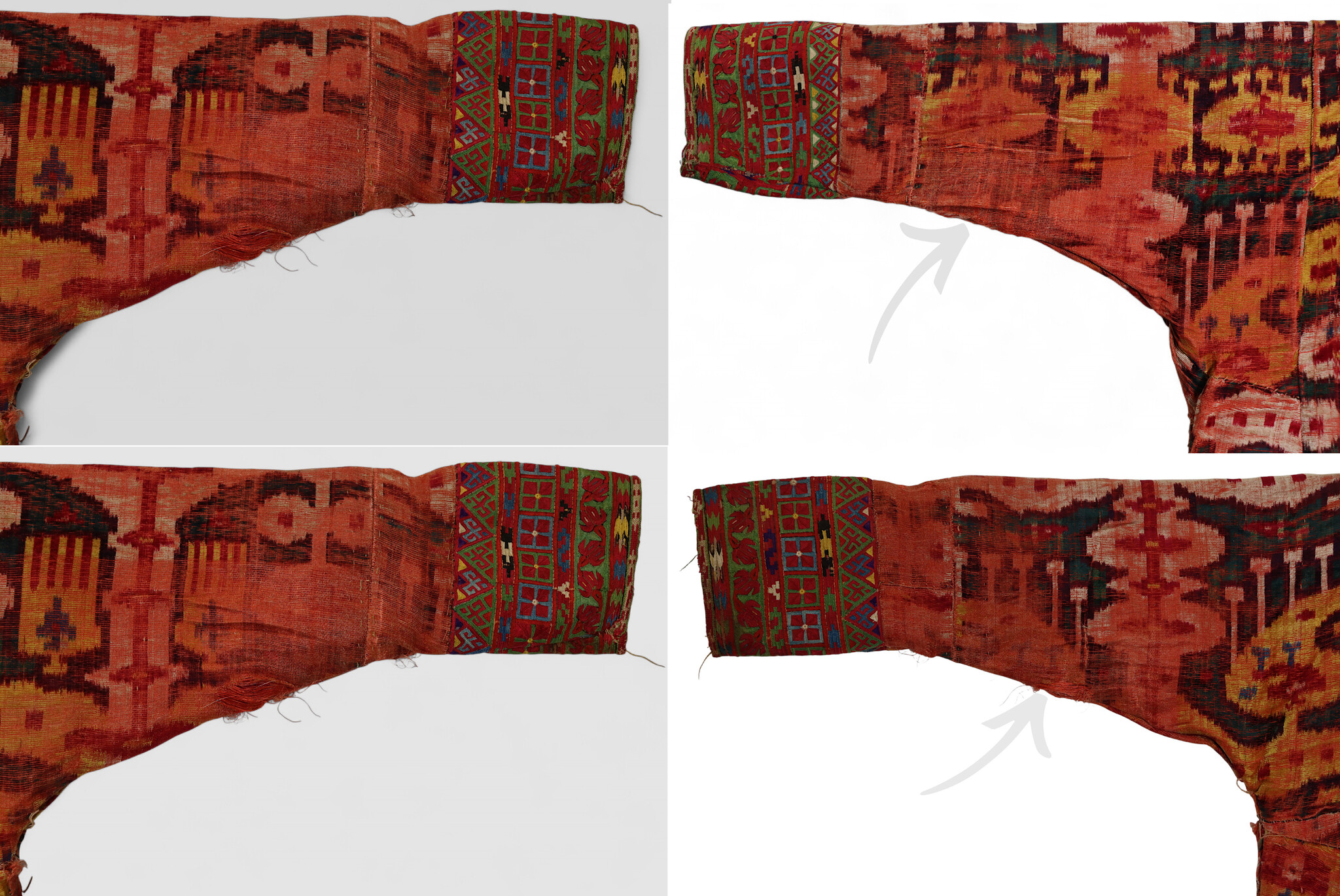
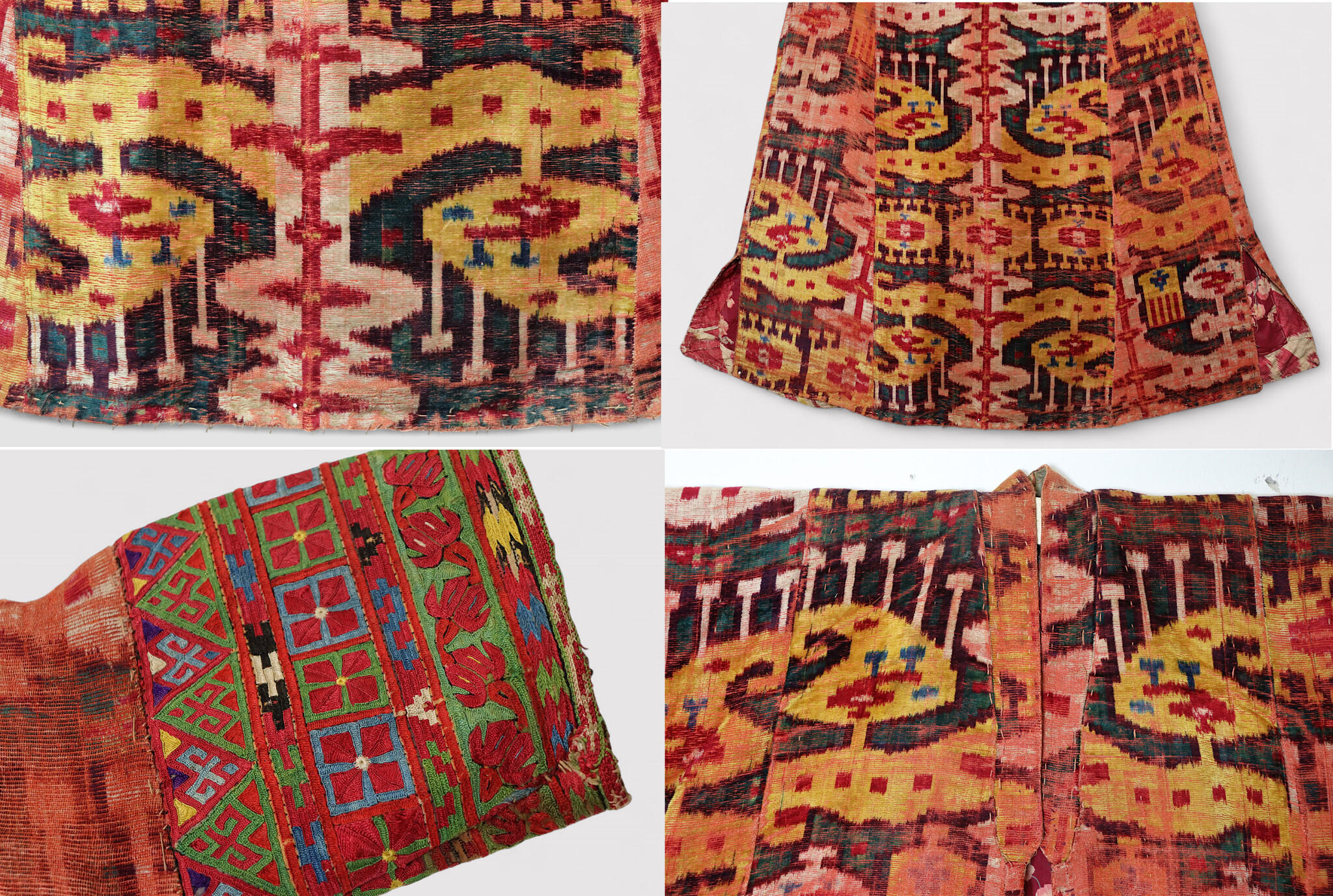


antique Bokhara embroidered Velvet Ikat Chapan, Uzbekistan, 19th C. Mantle chyrpy robe Coat bakhmal
Bokhara Velvet Ikat Chapan
Ikat dyeing was practiced in a very simple form for centuries in Central Asia. Then, in the 19th century, ikat dyeing became the most active and widely distributed textile art in Central Asia. Ikats traveled across the steppes as trade goods and as gifts of robes of honor from proud Kans to the Tsars and visiting dignitaries. It was in that golden age of ikat that the first velvet ikat appeared. Velvet ikats, called Bakhmal, quickly became the most costly and exclusive ikats of all. Textiles have always played a prominent role in Asian cultures. Clothing from the sixteenth to nineteenth is an endless source of information about the customs of diverse cultures.
In the making of velvet ikats, the weaver was using a complicated loom that allows threading of a double warp. Plain, one color silk thread was the foundational warp. It was then threaded with silk warp of ikat-dyed threads several times the length of the plain warp. As the weaving of the cotton weft progressed, the ikat-dyed warp was raised separately over grooved wires inserted on alternate picks. After a section was woven, a sharp blade was run down the grooves, leaving the velvet pile with its ikat pattern held by the alternate pick of the cotton weft.
This expensive and labor intensive fabric was used for the making of women’s chappans and small children’s hats.
This velvet ikat chappan is of ample proportions with a symmetrical design. The velvet pile is soft, long and in excellent condition. It is lined with Russian chintz and its borders are embroidered. It features typical zoomorphic shapes. Traditionally the ikat designers did not use templates or stencils, relying instead on their eyes and experimenting with forms and thus contributing to the of kilter design.
Circa: 18/19th century
Origin: Uzbekistan
Material: Silk Velvet
Condition: antique condition (with very heavy abrasion in the sleeves and front of the coat)
Total length: 118 cm
Total width: 166 cm
Sleeve length: 50 cm
Chest width: 66 cm
Name : Embroidered Mantle chyrpy
Category : Antique
Ethnic Group : Uzbek
Techniques : Embroidered
The offered nomads antique Mantle is original old and antique, handcrafted, sometimes very intricately crafted nomads - textiles from Uzbekistan. After years of use before the tribes there is, of course, the spots may be in the pieces may be missing small parts, the embroidery can be damaged or discolored, or be repaired.


Customer support
Products
Account
Kabul Art Galerie


Find the order you'd like to withdraw
Enter your email address and order number.
Check your mailbox
If your details match an order, you'll receive an email with a link to view and manage it.