- LIEFERUNG AM NÄCHSTEN TAG
- versandkostenfrei innerhalb des deutschen Festlands
- KOSTENLOSE RÜCKSENDUNG
- 14 Tage Rückgabe

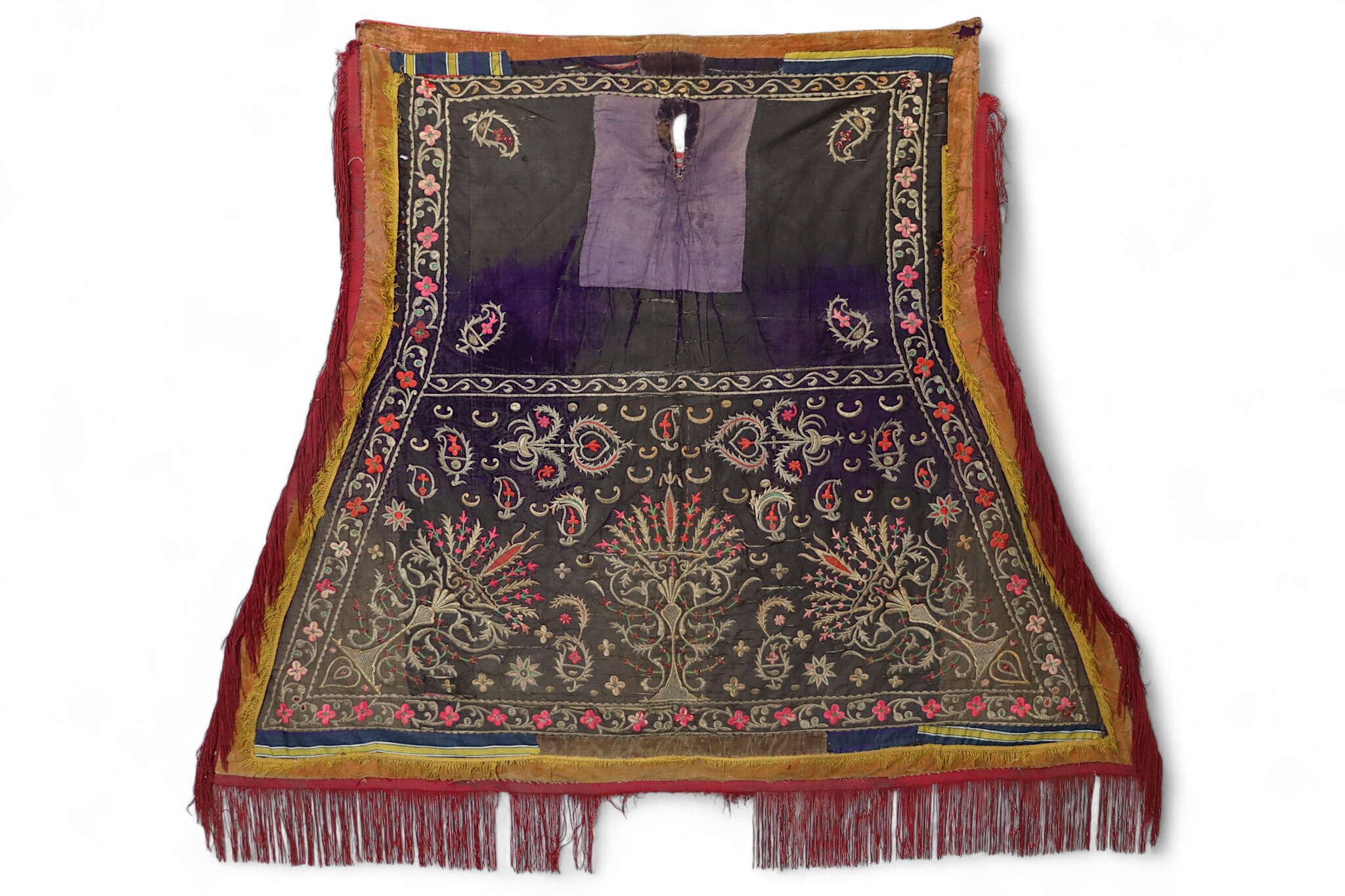

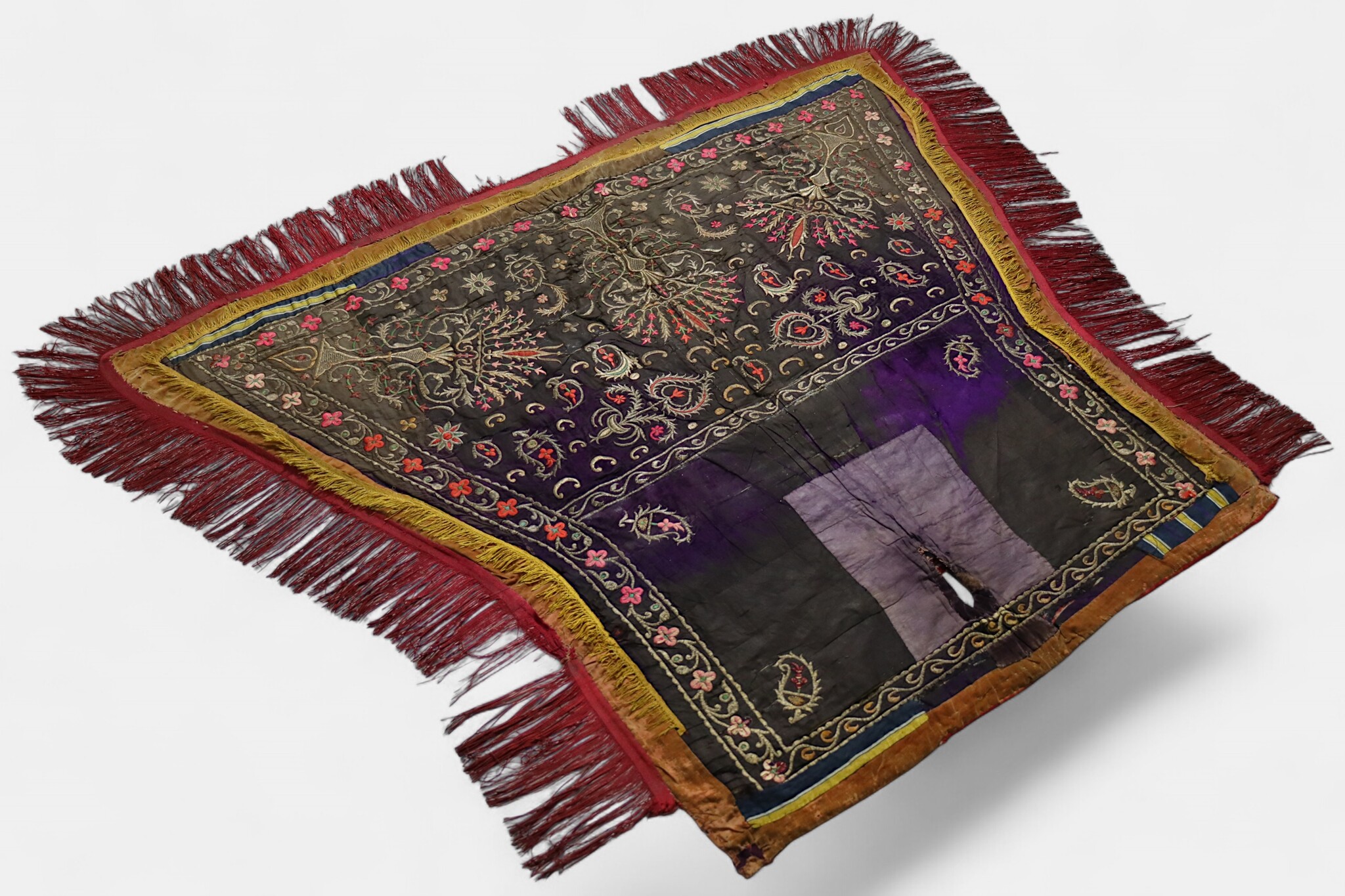
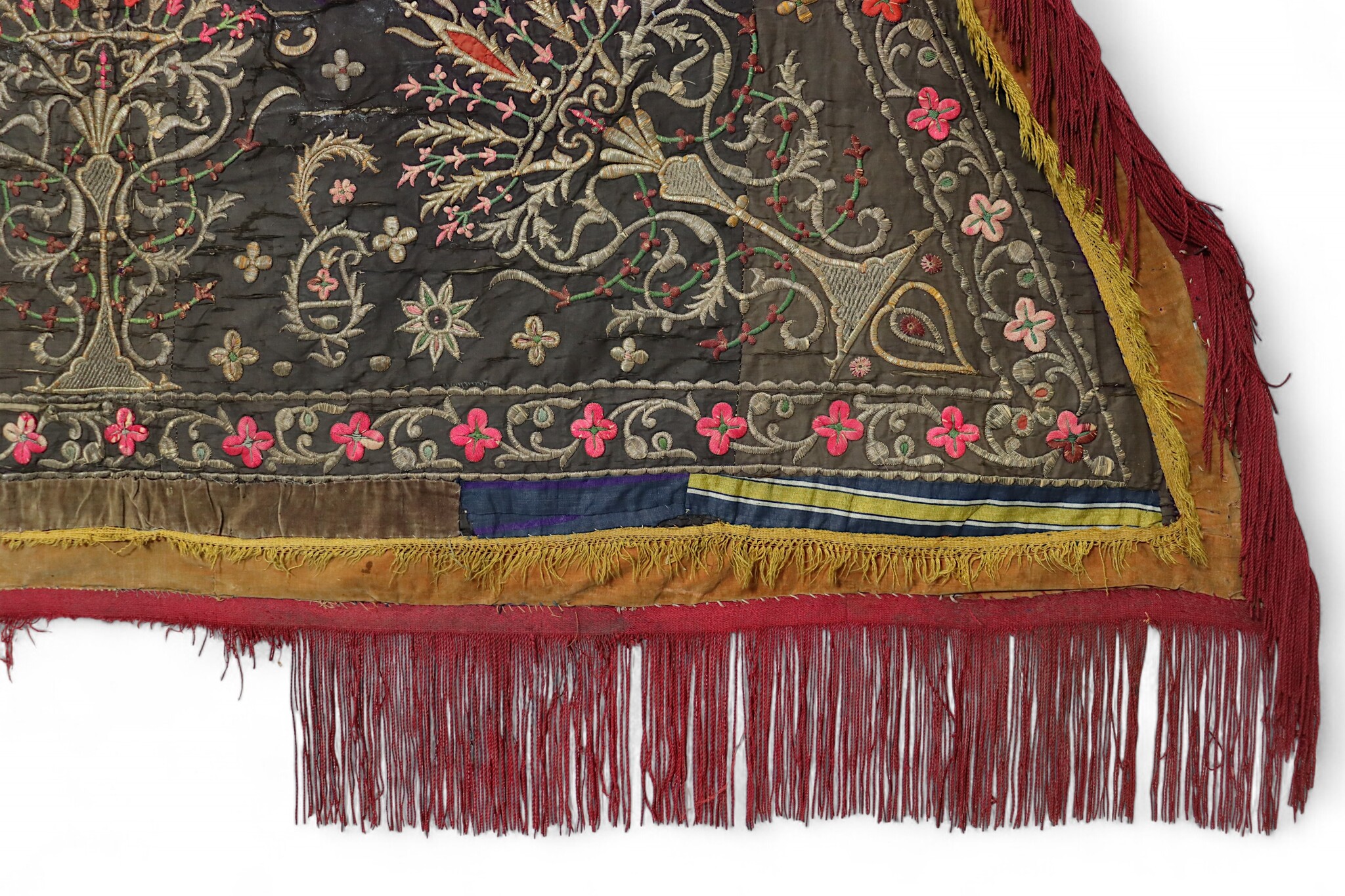
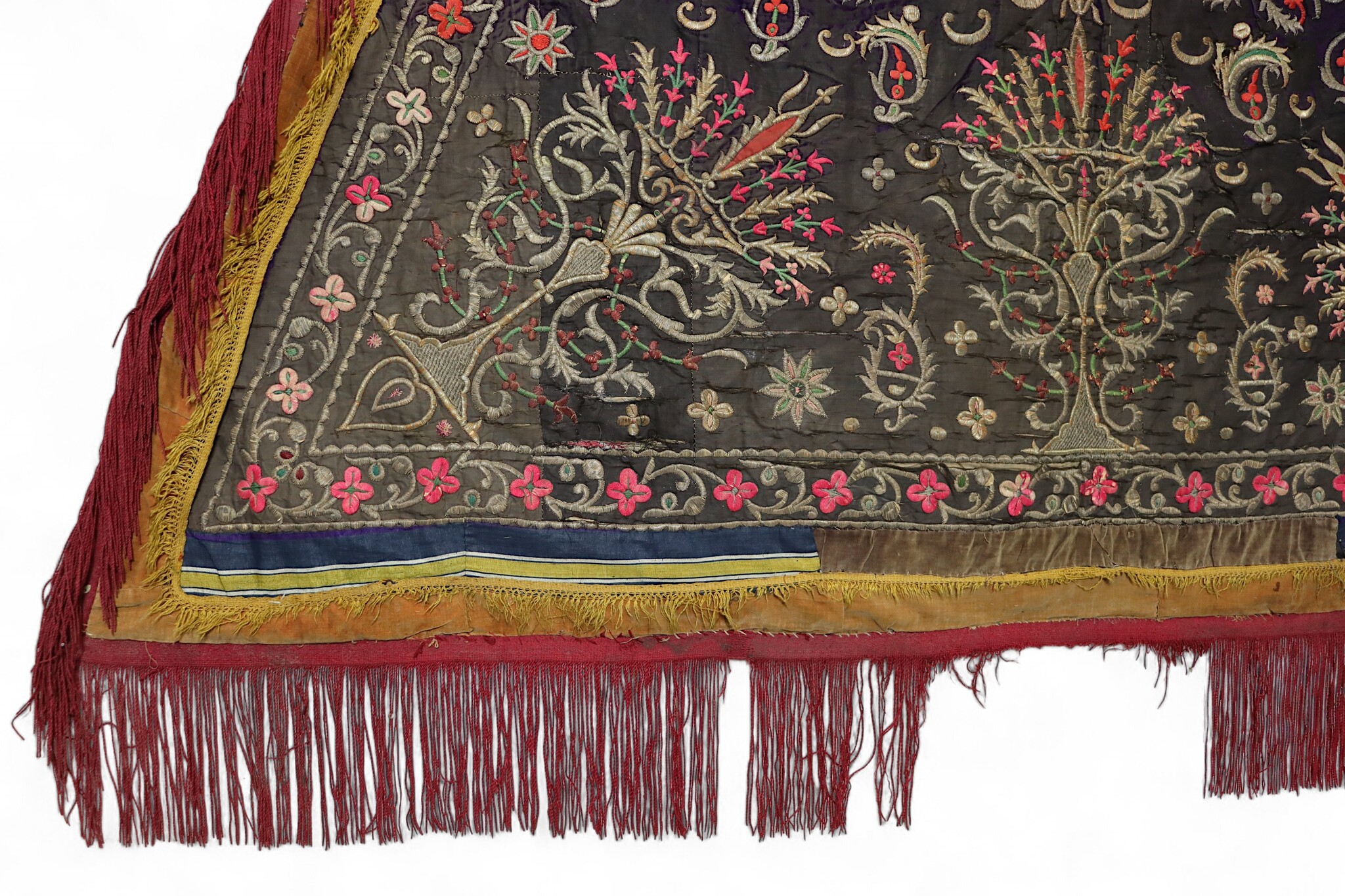
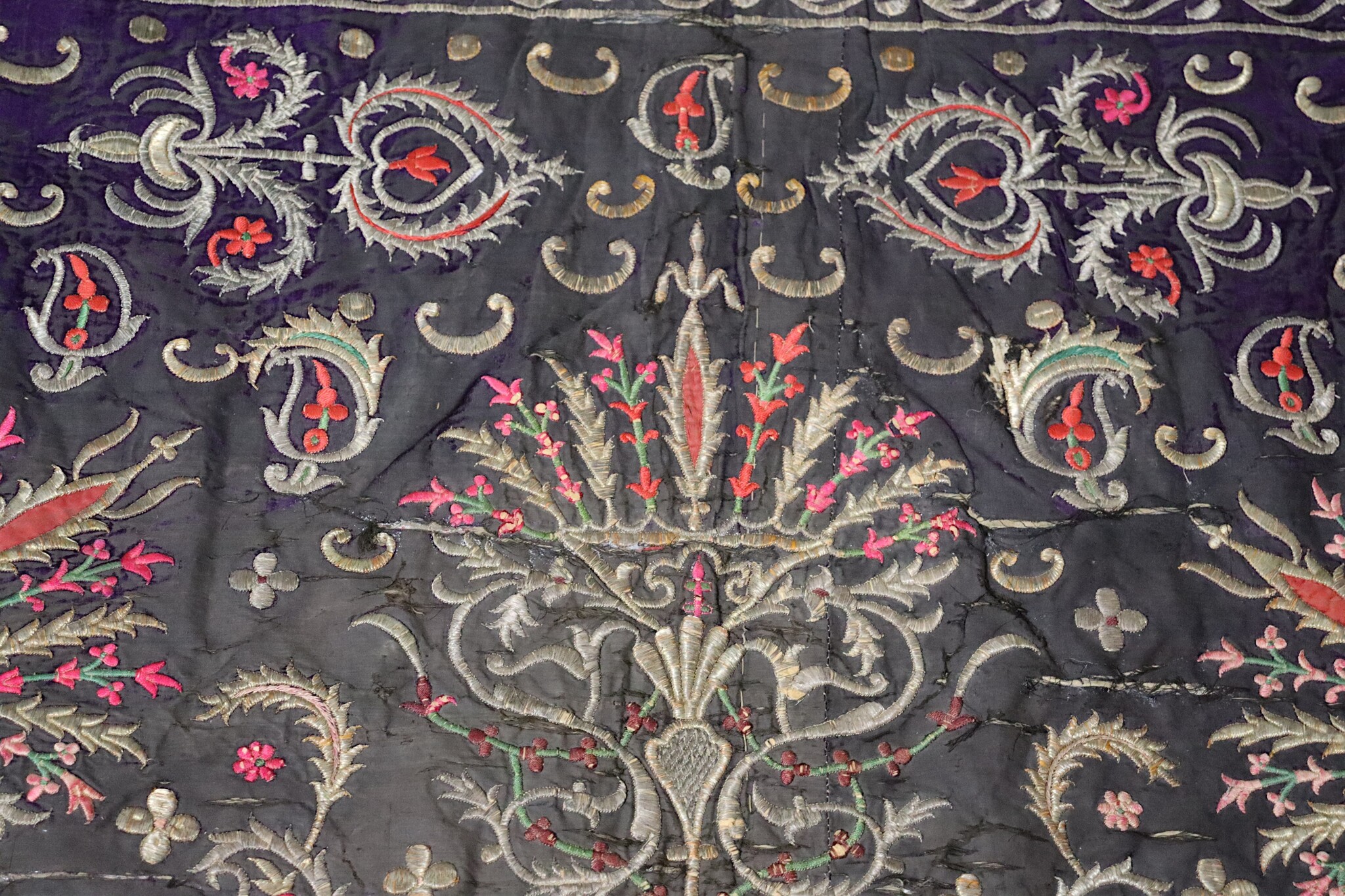
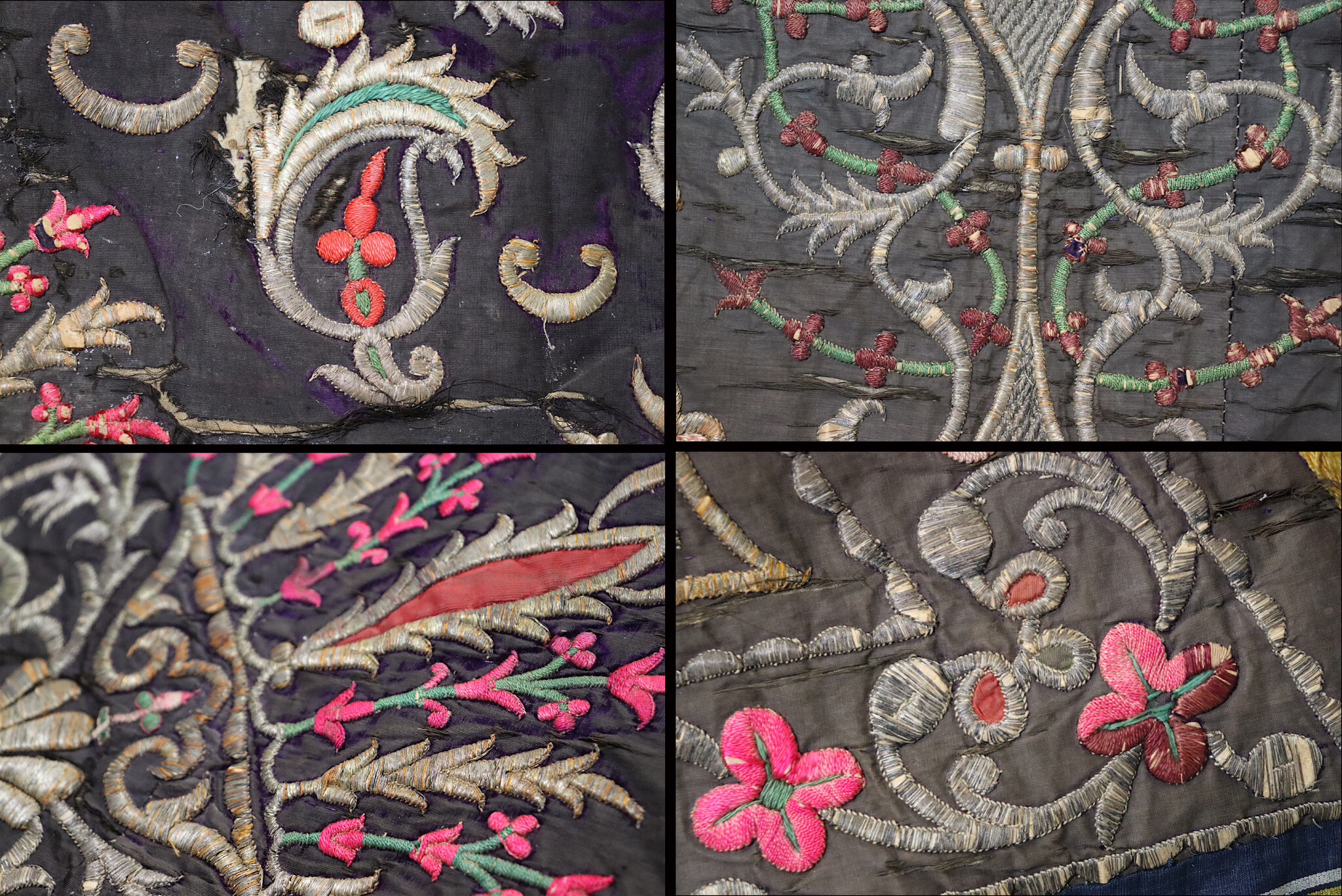


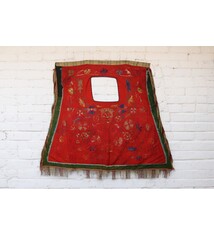
Antique metal-thread embroidered applique velvet Saddle-Cloth ( shabrack ) from a Royal Bokhara workshop Uzbekistan C18th
Atique fine metal-thread embroidered applique velvet Saddle-Cloth ( shabrack ) from a Royal Bokhara workshop Uzbekistan C18th oder 19th c.
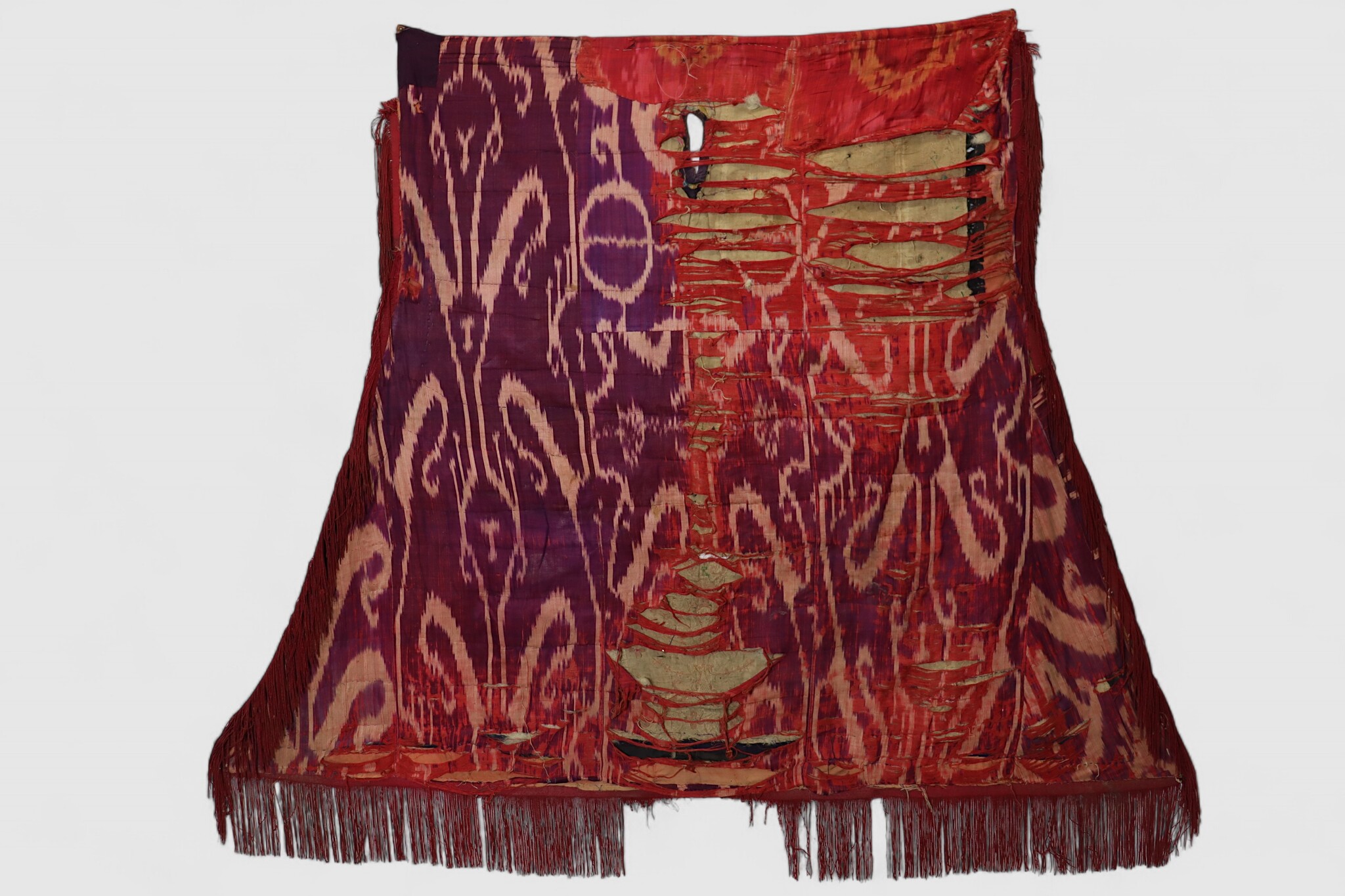
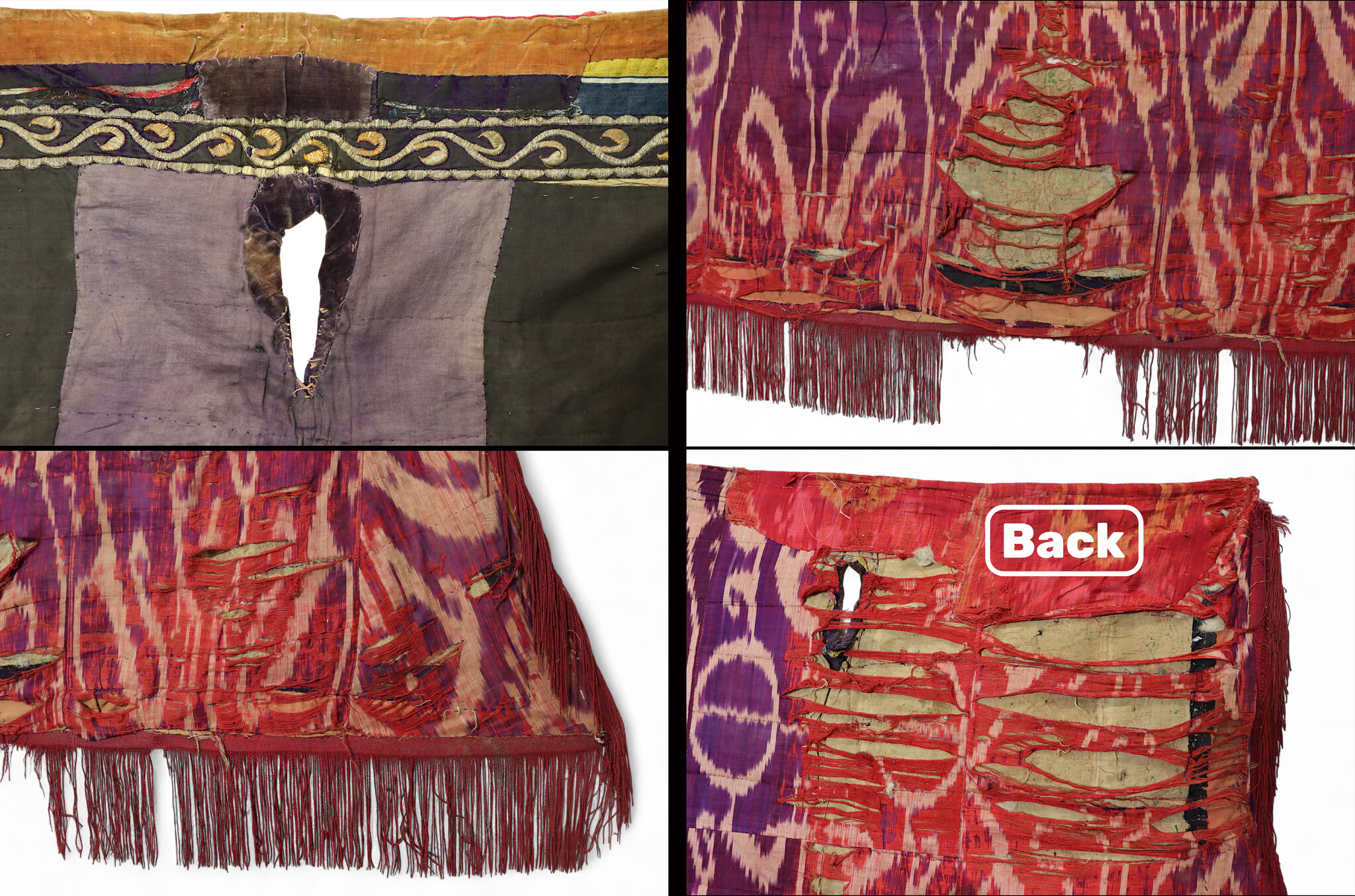
violet velvet, the central field divided into two registers, one containing a cusped cartouche with an aperture for the tail, with palmettes in the surrounding areas, the other part with three large floral medallions on a field , within borders containing floral filled cartouches, ikat backing, fringed, with suspension loops
Footnotes
Embroideries in silver and gold thread with applique decoration were considered to be amongst the most prestigious of Central Asian textiles. The technique first appeared in the Emir of Bokhara's workshops, and ritual exchanges of gold embroidered robes and other items between the Amir, his courtiers and administrators were a regular event in Bokhara. They were also given as diplomatic gifts. Designs were dictated by a variety of stylistic and symbolic conventions determined by the Amir.
size:
Width 190 cm x height 150 cm
Condition:
as seen in the pictures,There are strong abrasion to the embroidery .
Since ancient times, riding a horse was the only means of transportation for men in Uzbekistan. For city dwellers, it was a matter of social status. The wealthy decorated their velvet horse blankets with gold and silver threads. Bukhara's goldsmith masters were at the forefront, embroidering clothing, horse blankets, and many other items for the emir's court and the nobility. The main material for the embroidery was gold and silver thread, tightly sewn onto a silk fabric popularly called "kalobatun."
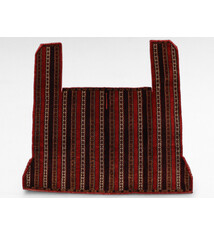
Horse blankets, or "dauri," came in two categories. The first included the "khosagi" (personal) for the emir's personal use, and the second, the "inomi," which was part of the emir's offerings. The horse blanket consisted of two parts: a rectangular "khoni-zingah" with sparse decoration and a trapezoidal, richly decorated part that covered the horse's croup. The gold embroidery on the ceiling was predominantly floral, but more rarely geometric.
If you have further questions about this article, we are at your disposal! We will send you more pictures if needed upon request!
Customer support
Products
Account
Kabul Art Galerie


Find the order you'd like to withdraw
Enter your email address and order number.
Check your mailbox
If your details match an order, you'll receive an email with a link to view and manage it.