- LIEFERUNG AM NÄCHSTEN TAG
- versandkostenfrei innerhalb des deutschen Festlands
- KOSTENLOSE RÜCKSENDUNG
- 14 Tage Rückgabe
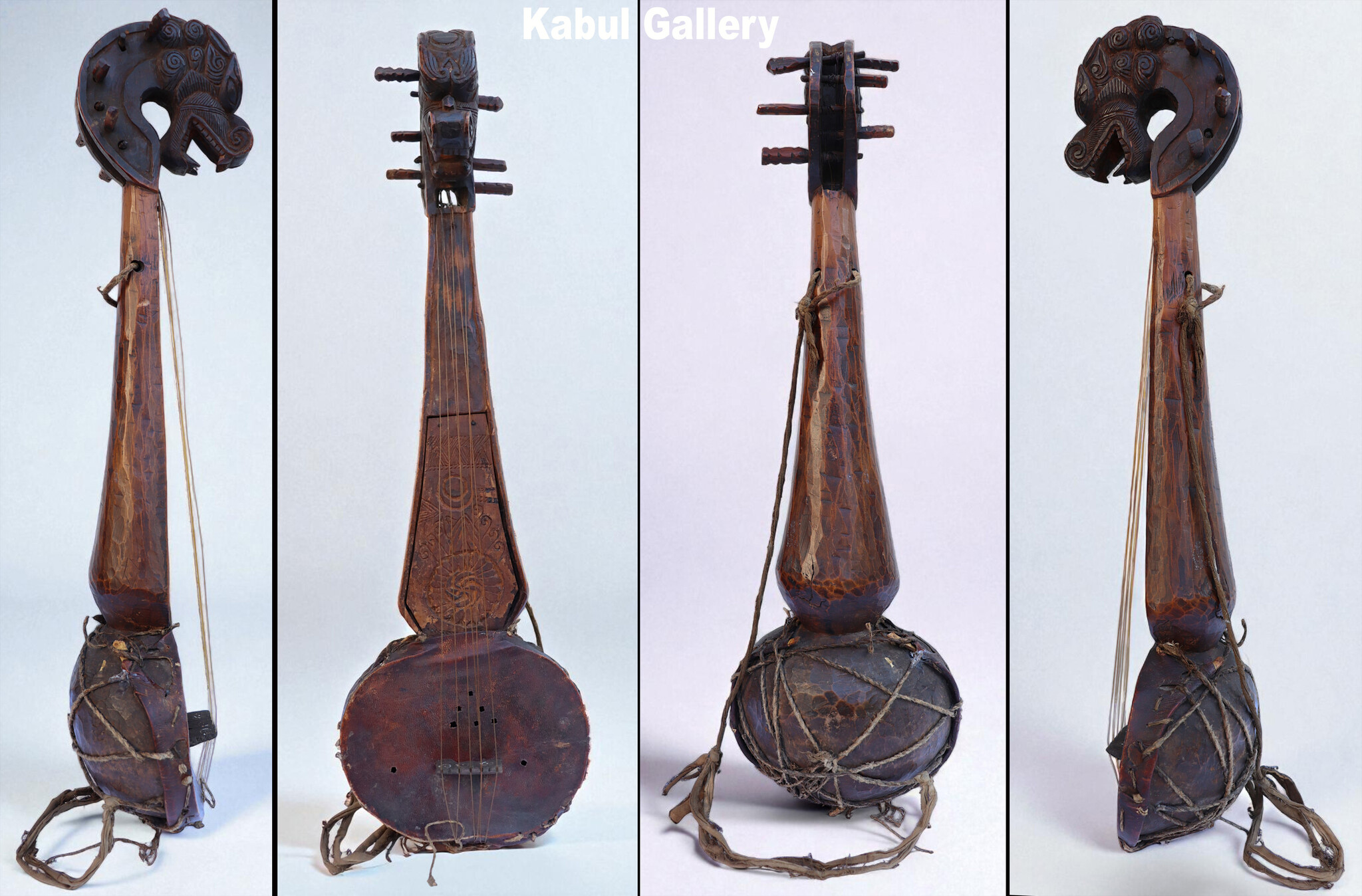
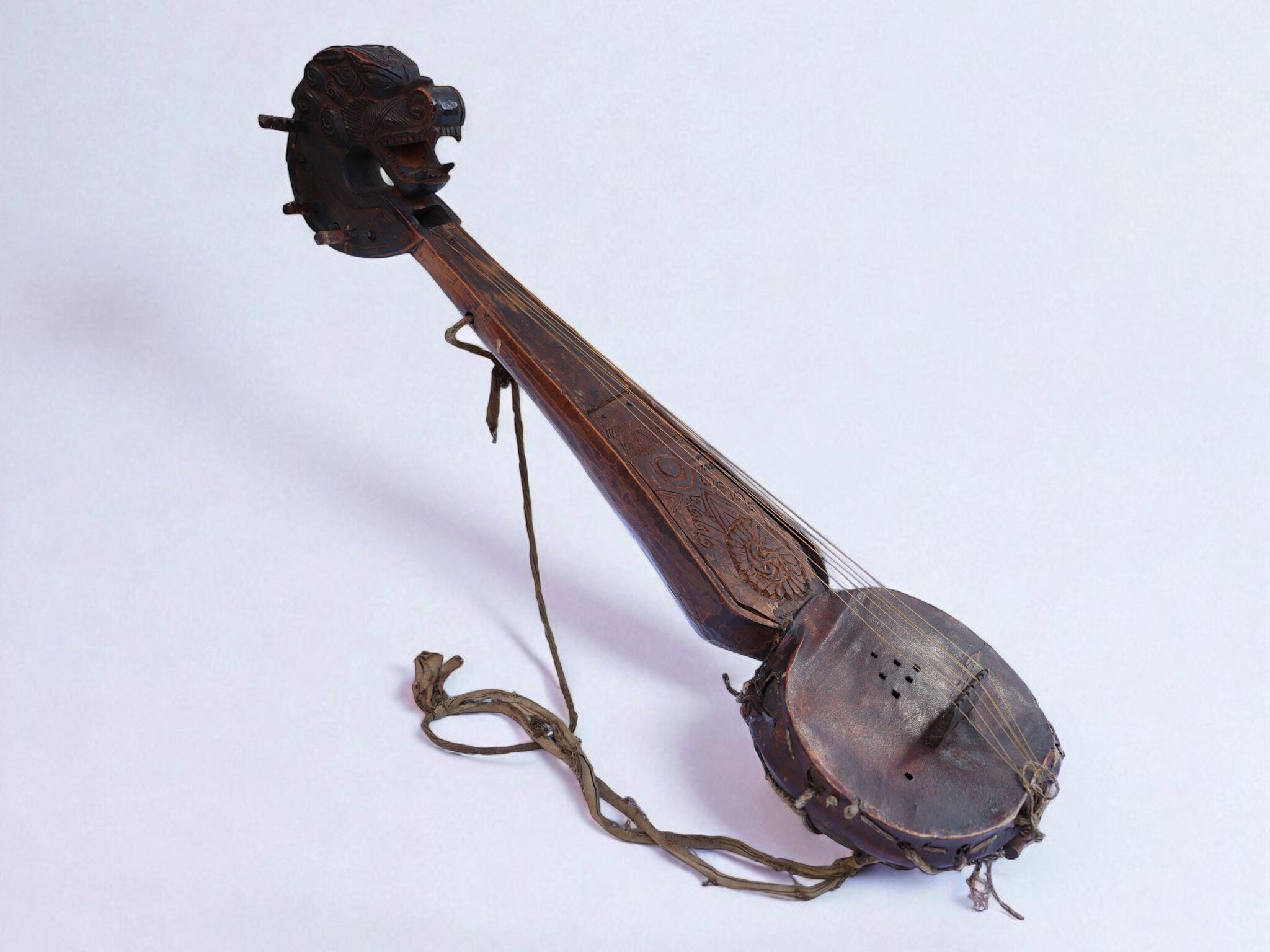

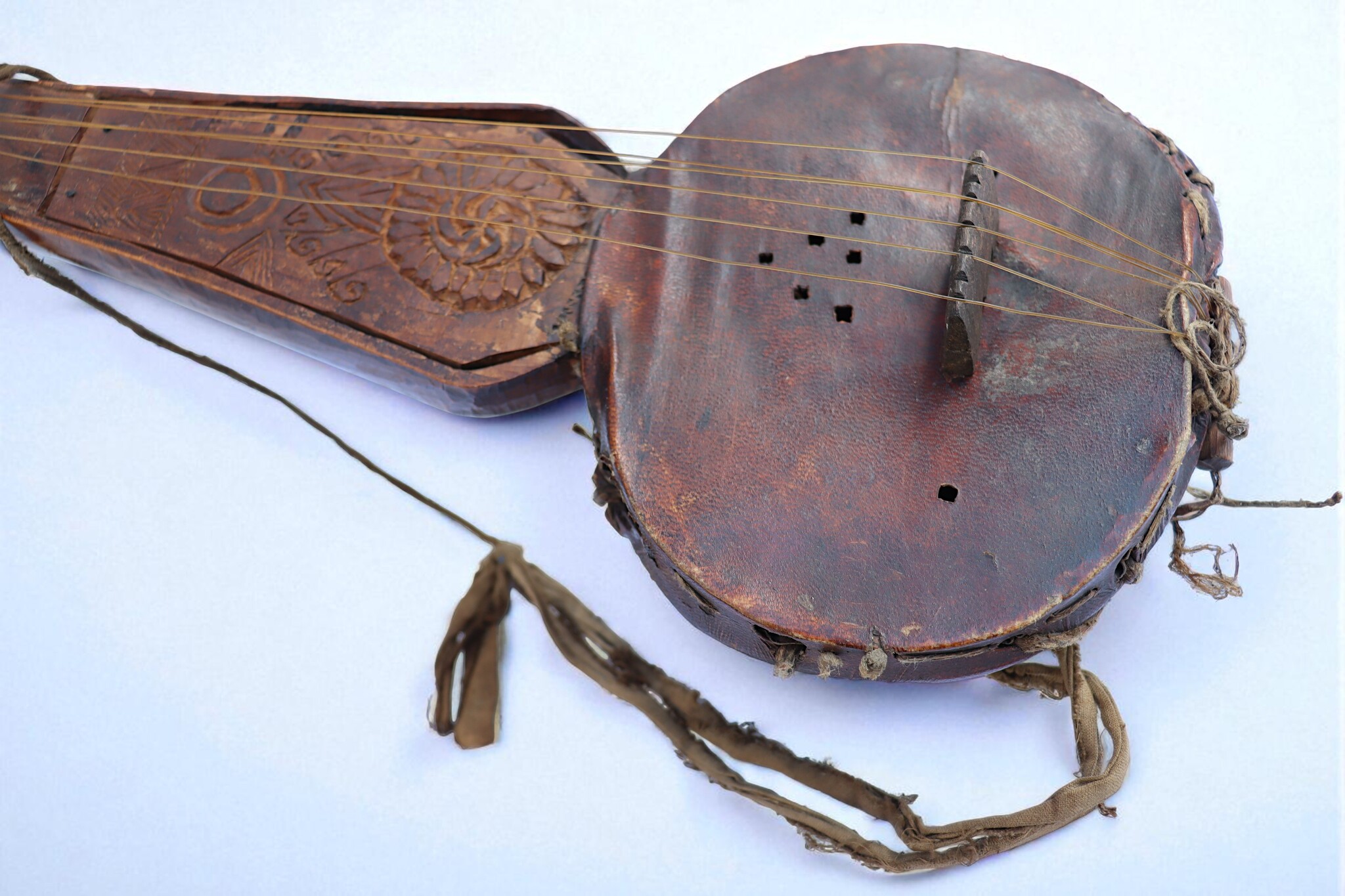
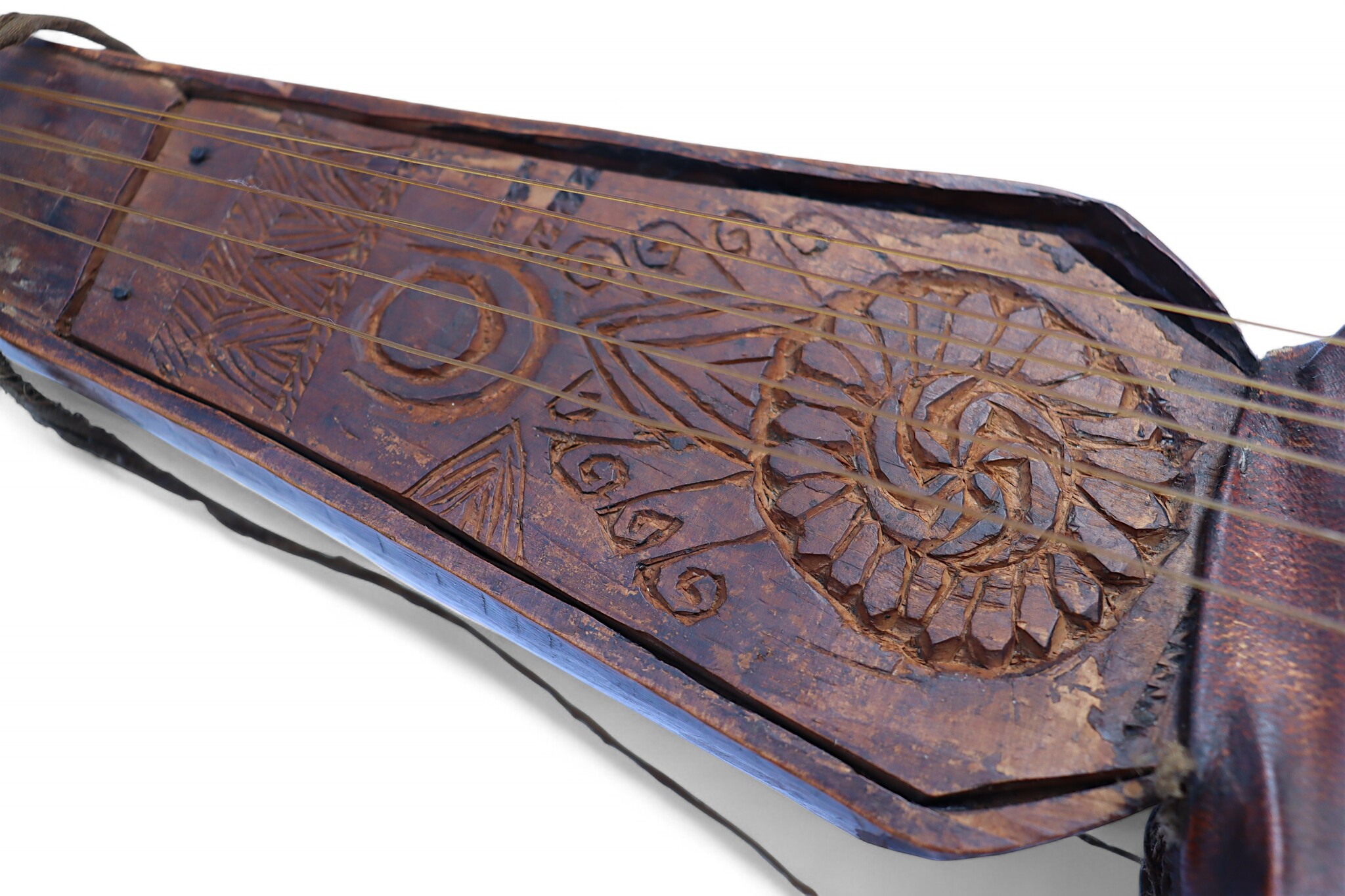
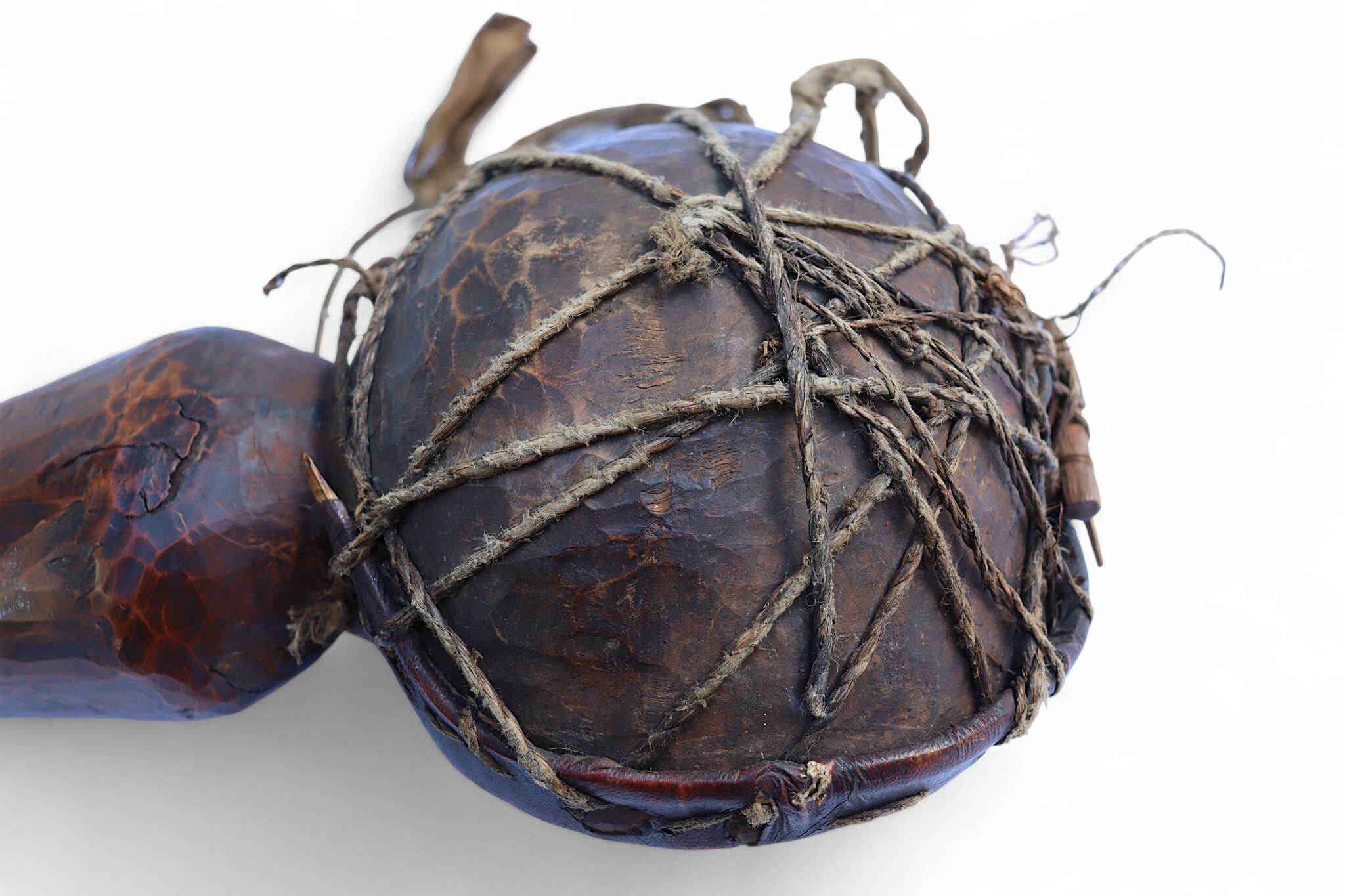

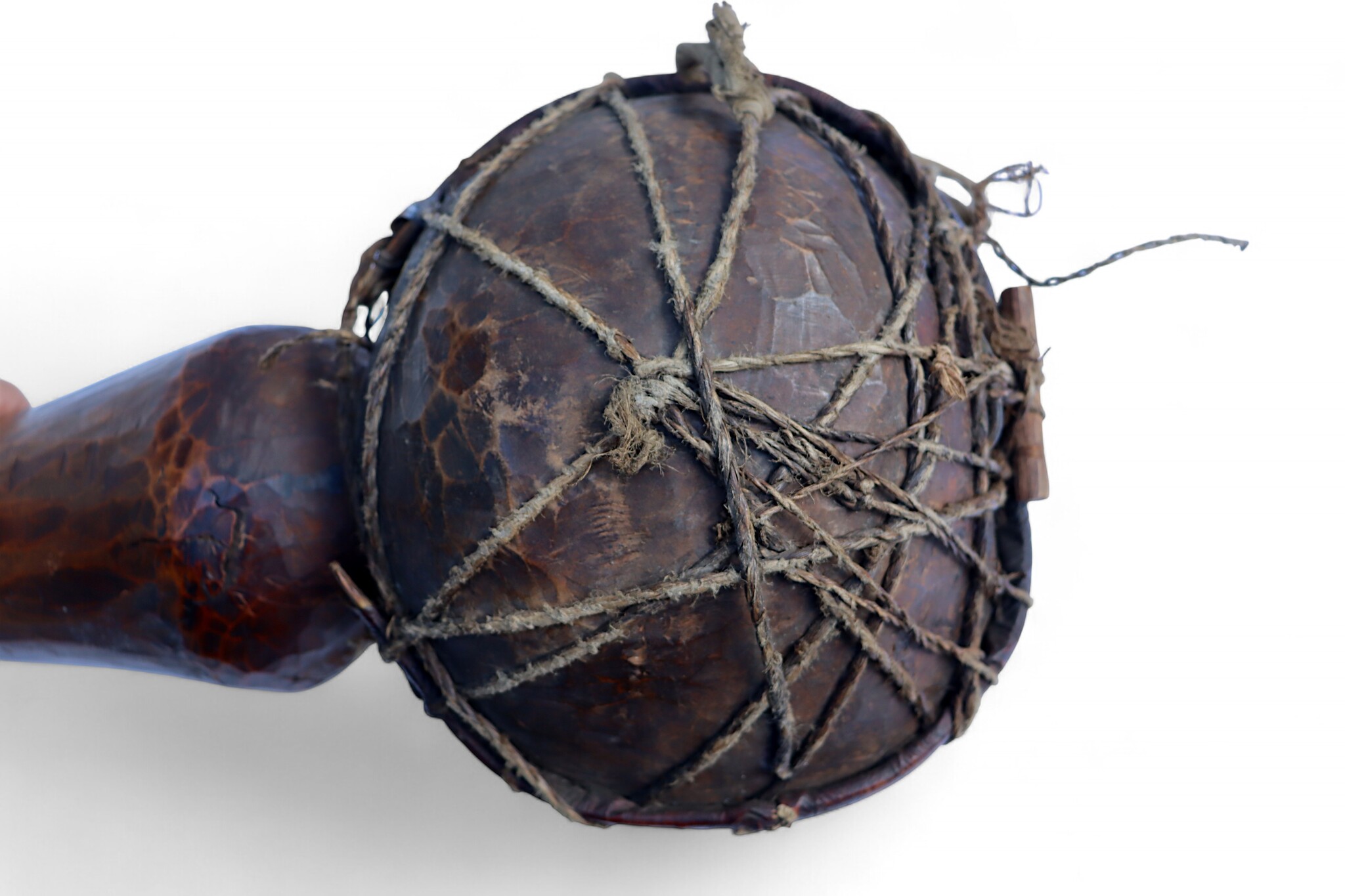
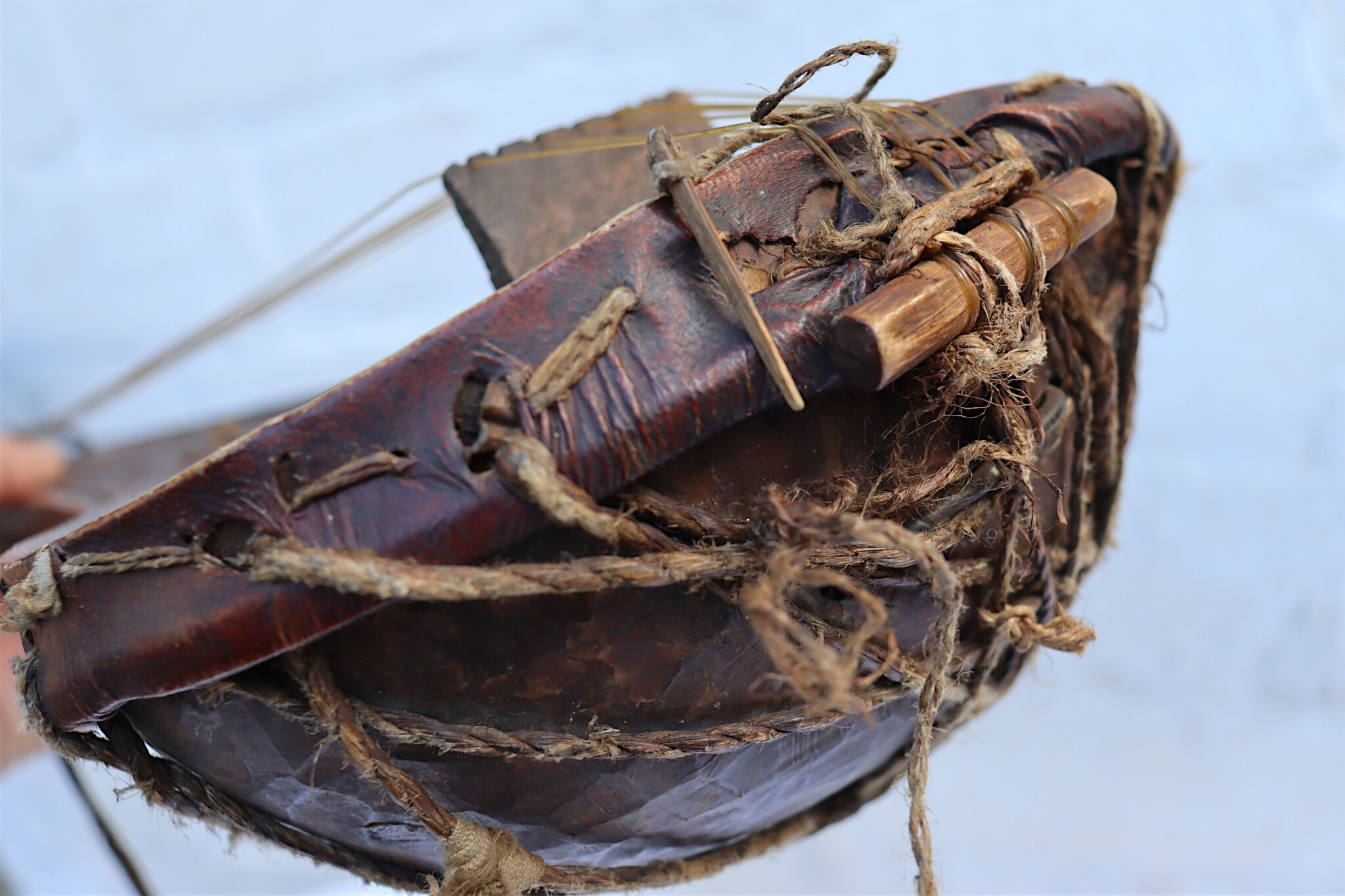


19th C. Antique Tibetan Tungna musical instruments Wooden Himalayan regions, particularly Nepal Tibet Sikkim Bhutan String Instrument
| Availability: | In stock |
The Tungna is a traditional plucked string instrument, deeply rooted in the musical heritage of the Himalayan regions, particularly Nepal, Tibet, Sikkim, and Bhutan. This instrument is renowned for its distinct, resonant sound and its unique construction, which involves carving the entire body from a single piece of wood. The front of the instrument, forming the sound box, is covered with stretched animal skin, typically goat or buffalo, over which the bridge is placed. The Tungna is fitted with four strings, which were historically made from animal gut but are now more commonly fashioned from nylon or fishing wire. These strings are anchored at both ends—one to the tuning keys and the other to the body—while the bridge acts as a cantilever, maintaining the necessary tension for sound production.
The Tungna holds a special place in the cultural life of Himalayan communities, especially among the Tamang, Sherpa, Gurung, and Tibetan people. It is often played during festivals, auspicious occasions, and communal gatherings, where musicians accompany their playing with singing, often composing songs to mark significant events such as the New Year or harvest celebrations. The instrument is not only a vehicle for musical expression but also a symbol of communal identity and tradition, with many households in the region possessing at least one Tungna.
History of the Tungna
The history of the Tungna is intertwined with the cultural evolution of the Himalayan region. Its origins can be traced to the mountainous areas of Nepal, Tibet, Sikkim, and Bhutan, making it a distinctly Himalayan instrument. The instrument is believed to have developed alongside the migration and settlement patterns of ethnic groups such as the Tamang, Sherpa, Hyolmo, and Tibetan peoples, who brought their musical traditions with them as they moved across the region. The Tungna shares historical and structural similarities with other ancient lutes found throughout Asia, such as the Afghan rubab from the 13th century and the Mongolian lute from the late 13th century. These connections suggest that the Tungna, or its precursors, may have been present in the Himalayan region as early as the first millennium CE, evolving over centuries in response to local musical needs and aesthetic preferences.
By the 8th century, instruments similar to the Tungna were already prominent in the cultural life of Bhutan and Tibet, as evidenced by their depiction in religious art and their association with Buddhist saints and deities. The Tungna’s continued presence in the region over the centuries attests to its enduring appeal and its role as a vessel for the transmission of oral history, folklore, and communal identity.
Construction and Physical Structure
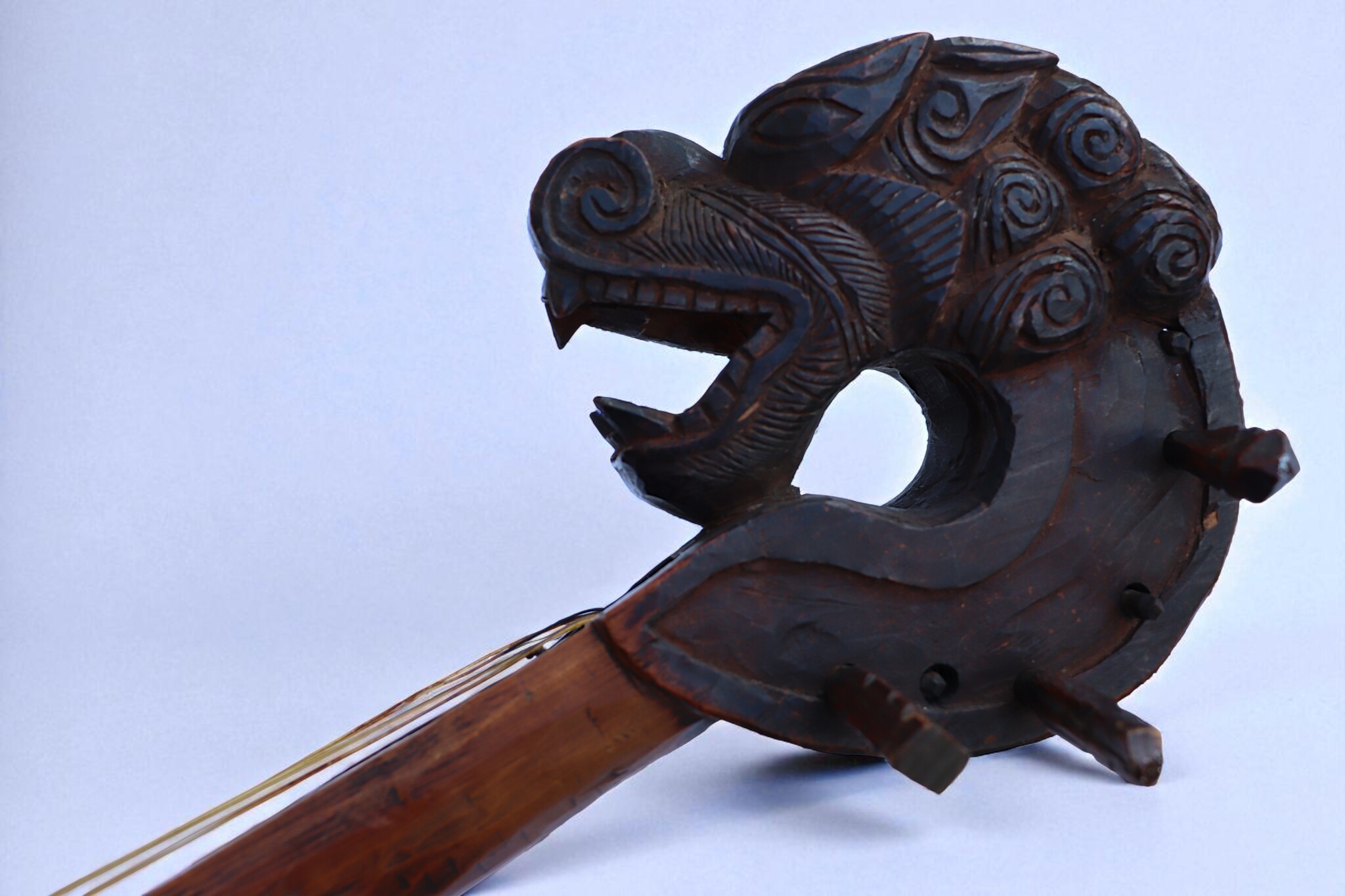
The construction of the Tungna is a testament to the craftsmanship and ingenuity of Himalayan artisans. The instrument is typically carved from a single block of lightweight, resonant wood, such as Nepalese alder (uttis), rhododendron, or schima (chilaune). These woods are favored for their acoustic properties and their availability in the Himalayan region. The body of the Tungna is hollowed out to create a resonating chamber, with the front covered by a tightly stretched piece of animal skin, usually goat or buffalo. This membrane serves as the soundboard, amplifying the vibrations produced by the strings. The neck of the Tungna extends from the body and is often adorned with intricate carvings, including representations of animals—both real and mythical—such as dragons, horses, birds, or the garuda, a demigod figure in Hindu and Buddhist mythology. These carvings are not merely decorative; they are imbued with cultural and spiritual significance, reflecting the beliefs and traditions of the communities that play the instrument.
At the end of the neck is the headstock, which houses the tuning keys. Traditionally, these keys were made from wood or animal bone and are used to adjust the tension of the strings. The Tungna typically has four strings,(but this piece has 6 strings) which are anchored at the base of the body and run over the bridge, which is positioned on the animal skin soundboard. The bridge is designed to act as a cantilever, maintaining the proper tension for each string. While gut strings were once standard, modern Tungnas often use nylon or fishing wire, which, while more durable and accessible, impart a slightly different tonal quality. The instrument varies in size,
Length approx. 65 cm
Width approx. 120 cm
Height approx. 14 cm
Weight approx. 880 g.
Buyer will receive exact item pictured! Please look at the images carefully before purchasing!
*** Actual item may differ slightly than the image due to image quality, lightening, Contrasts, resolutions and other factors. However, in most cases actual items look better than the images.
If you have further questions about this article, we are at your disposal! We will send you more pictures if needed upon reques.


Customer support
Products
Account
Kabul Art Galerie


Find the order you'd like to withdraw
Enter your email address and order number.
Check your mailbox
If your details match an order, you'll receive an email with a link to view and manage it.